
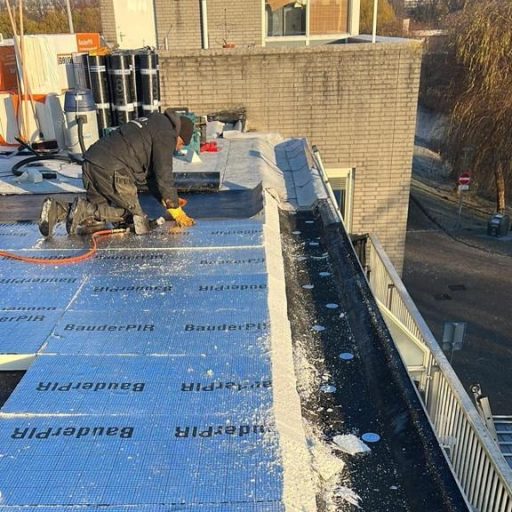
Roof insulation

Are you thinking about insulating your roof? Then call us immediately or request a quote

Do you want roof insulation?

We are happy to help you.

If your roof is not properly insulated, you can lose a lot of heat. In addition, inadequate roof insulation can cause moisture problems, such as mold and wood rot. Good insulation in your roof helps you save energy, is better for your health and can extend the life of your roof.

Uniek Dakwerken from Weesp is happy to take care of the roof insulation of your flat roof. There are three options: cold roof insulation, warm roof insulation and an inverted roof.

Read on to learn more about the advantages and disadvantages of these types of insulation or request a no-obligation quote immediately.

insulation roof

Cold roof insulation

Cold roof insulation is placed under the roof boarding, usually in the form of glass or rock wool. The roof structure itself is therefore not insulated and is therefore sensitive to temperature fluctuations.

This form of roof insulation has several disadvantages and is therefore only used when other forms of insulation are impossible. Uniek Dakwerken is happy to discuss with you which form of insulation is most suitable for your flat roof.

Cold roof insulation has the following disadvantages:

  • The roof construction can expand and contract with temperature fluctuations, which can result in cracks.
  • It is difficult to guarantee sufficient ventilation. Inadequate ventilation can lead to condensation problems, such as wood rot.
  • The vapor barrier is placed just above the ceiling and can be damaged during renovation work, such as installing new electrical cables.

Insurance compensation for storm damage

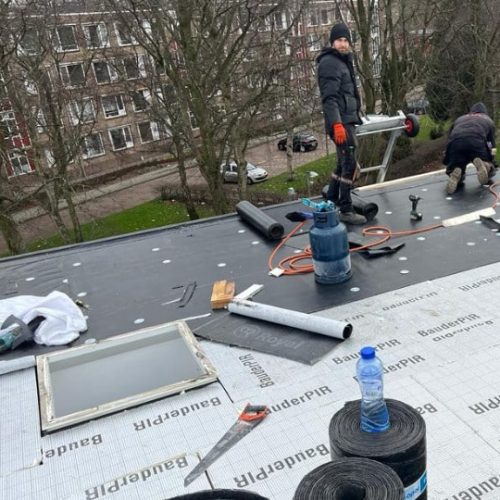
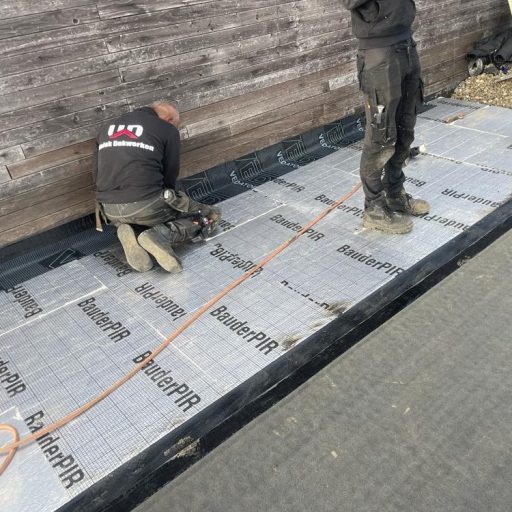
With warm roof insulation, the insulation materials (XPS or PIR plates, for example) are placed on top of the roof structure. A new, weather-resistant roof covering is placed on top of the insulation layer.

Warm roof insulation is often more expensive to install than cold roof insulation, but it offers several advantages.

Cold roof insulation has the following disadvantages:

  • The roof construction can expand and contract with temperature fluctuations, which can result in cracks.
  • It is difficult to guarantee sufficient ventilation. Inadequate ventilation can lead to condensation problems, such as wood rot.
  • The vapor barrier is placed just above the ceiling and can be damaged during renovation work, such as installing new electrical cables.

Please note that warm roof insulation makes your roof thicker on the outside. You may therefore need to apply for a permit for this, so please inquire with your municipality before the work starts.
Roof insulation
Roof insulation

Inverted flat roof

With warm roof insulation, the insulation materials (XPS or PIR plates, for example) are placed on top of the roof structure. A new, weather-resistant roof covering is placed on top of the insulation layer. Warm roof insulation is often more expensive to install than cold roof insulation, but it offers several advantages.

Advantages:

  • It is advantageous because the roof covering does not need to be replaced.
  • Your roof is protected against moisture and temperature fluctuations.
  • You do not need an additional vapor barrier.
  • The roof insulation can also be installed in bad weather.

Disadvantages:

  • The roof construction must be able to withstand the extra pressure of the ballast layer.
  • It is more difficult to lay the insulation in the corners.
  • An inverted flat roof has a lower insulation value than warm roof insulation.
  • Your roof should have a slightly greater slope to prevent moisture problems.